This is my long time ambition, to create a blog in which I could present my version of the Ramayana, and I am thankful to Blogger, and Lord Rama for have made this possible.
So, here I go...
Kosala was a beautiful land in the heartland of the Bharatha nation, which forms modern India. It had the beautiful river of Sarayu flowing along its capital Ayodhya. Ayodhya had been named thus due to the unhappening of any war in the place. Such was the kind of significance the place held among the kings of yore. The land of Ayodhya was ruled by the kings of the solar line. The solar line or the Surya Vamsa was the dynasty which essentially was the progeny of Surya or the sun god. Surya's sun Manu, who was known for his lawful ideas and his Manushastra or Manusmrithi, was the father of Ikshvaku, the first king of the Surya Vamsa. Ikshvaku, whose name meant SUGARCANE, was the first person to implement the Manusmrithis among the people and people sugar like sweet happiness in his rule. There are so many kings who belonged to this dynasty, including the great Bhagiratha, who brought the Ganga down to earth.
There is a legend behind this story, according to which there was this king called Sagara who was performing the Ashvamedha yagna. He had 60001 sons, 60000 from his first wife, and one, Anshuman, who was lazy at war, from his second wife. Now, when the yagna is on, Lord Indra, the king of the Devas, jealous of Sagara's increasing power, steals the Ashva (horse) kept for the yagna, and hides it the cave of Sage Kapila, who is said to be an incarnation of Lord Narayana. Modern day California, is said to be this place where Kapila was doing his penance, and hence the similarity in the names. Sagara sends his 60000 sons of the first wife to search for the horse, which they find in Kapila's cave. They accuse him of being the thief and use derogatory language against, something unbefitting Kshatriya princes. Kapila is woken up from his deep meditation due to the disturbances, and looks at them in a fit of anger. But his eyes prove enough to destroy them all of them to ashes. Then Anshuman comes in search of his brothers, where he finds a huge heap of ash and the Ashva in the cave of Kapila. When he asks the sage to forgive his brothers, the sage says that it would be practically impossible to bring them back to life, but they would attain salvation only on account of their ash being dissolved in the holy Ganges of Lord Brahma's kamandalam. Then Anshuman tries to bring Ganga mata back to earth, in a desperate but futile effort, and so does his son. But his grandson Bhagiratha, being a man of great values, performs intense tapas to bring the holy river back to earth. But the great gravitational force in which the Ganges flows from the heavens to earth had the potential to destroy the earth. So, then Bhagiratha prays to Lord Shiva to help him out, heeding to which Lord Shiva captures the Ganga in his matted head locks and releases her with a controlled speed at the Gangotri region of the Himalayas. Such was the greatness of the Bhagiratha, who lived in the line of Ikshvaku.
Even five of the Jain thirthankaras are said to have been of the Solar line.
In the same line, there lived a king called Dilipa, who had an illustrious son by name Raghu, after whom the Solar line also came to known as the Raghu kula. Raghu kula had an illustrious son by name Aja, one who was unmatched in valour and wisdom, one who matches only Arjuna and Krishna in the amount of people he fought against during the swayamvara of a princess who chose him to be her husband. This Aja had a son called Dasharatha, the 63rd king of the Ikshvaku line, one who could fight ten chariots at a time. There was this king called Ravana, who was once put to shame by Dasharatha when he had accept loss to him, and as revenge, after intense tapas, he got a boon from Lord Brahma, asking for no child to be born from the loins of Dasharatha.
Dasharatha was a great ruler, with three prominent wives among many thousand. The three of them were of names Kaushalya, Kaikeyi and Sumitra. Dasharatha had a daughter born to Kaushalya by name Shanta. She was married of sage Rishyashringa, who was born to sage Vibhandaka and the celestial danuese Menaka. The sage, Vibhandaka was seduced once by the danuese and she gave birth to a child, but once her duties were over, she went back to Amaravati, the land of the devas, leaving her husband and child. This led to the rishi developing hatred for the women folk, and thus he raised his son abnormally, away from the eyes of women. At the time that the boy becomes a young man, the kingdom of Anga suffers from drought and famine. The king, Dasharatha, is told that this can only be alleviated by a brahmin with the powers that come from observance of perfect chastity. The only such person is Rishyasringa. He has to be brought to the city, and be persuaded to carry out the necessary ceremonies. Despite his fear of the power and anger of the boy's father, the king sends young women, and later his daughter 'Shanta', to introduce the boy into normal society. This is done, Rishyasringa uses his powers, the kingdom receives bountiful rains and Rishyasringa then marries the princess Shanta. Even the holy spot Singeri is named after Rishyasringa. Now, the king wants a male heir to the throne, but his wives don't concieve. So he approaches his kula-guru sage Vashisht, asking him what he should do. Then, Vashisht asks him to approach Rishyasringa regarding this matter, and so Dasharatha goes to meet his son-in-law, and waits for days together, waiting for him to end his tapas. Once, the tapas is over, Rishyasringa, gives him an option of performing the Putra-Kameshti yagna, where couples with progeny are gifted with children. With Rishysringa as the chief priests, and dozens of other reputed rishis, Dasharatha performs the yagna. Out of the sacrificial fire appears a Gandharva, who gives a bowl of divine kheer to the king, and asks him to give this to his wives who would then concieve soon. The king divides the kheer among Kaushalya and Kaikeyi. But both being extremely fond of Sumitra, give her a significant part of their kheers.
In due course of time, the three queens give birth to children.
Kaushalya gives birth to a dark complexioned bluish child, a symbol of divinity, one who would be the most ideal man ever born, one whom the naming experts claimed was an incarnation of Lord Vishnu himself, and hence named him Rama.
Kaikeyi gave birth to another slightly darkish, handsome child, one said to be the upholder of dharma, one they claimed was an incarnation of Lord Vishnu's conchshell, they named him Bharatha.
Sumitra gave birth to two children. Both fair complexioned, were said to be masters of war, and extremely faithful to Rama and Bharatha respectively, just as Sumitra was to Kaushalya and Kaikeyi, they were incarnations of Lord Vishnu's serpent coil, the great Sesha, and Lord Vishnu's chakra respectively, were named Lakshmana and Shatrughna.
All the four of them were grown as gentlemen of the first order, learning their Vedas, other scriptures, arts of ruling, and other warfare in great style by their kula-guru Vashishta, and grew up to be great human beings, and more so, greater children to their parents.

About Me
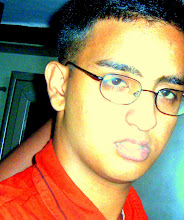
- Chappli
- I'm a doctorate student at Stanford University. I did my undergraduate studies at IIT Madras. I blog, when I'm not mugging (the Indian sense), playing cricket, quizzing or making short films. Blogging is my form of expressing, venting out, not-very-short story writing and documentation! :)
No comments:
Post a Comment